

US Reportedly Preparing Drone Strikes in Nigeria as Covert Surveillance Flights Raise Questions
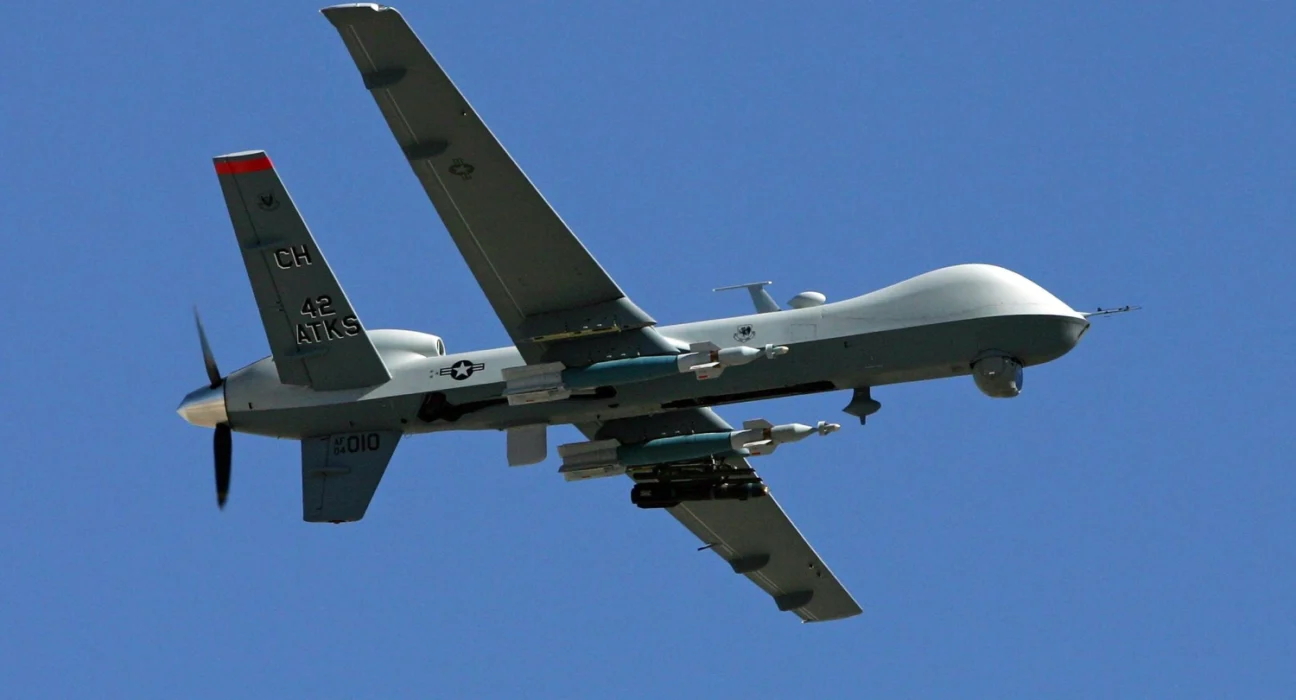
Fresh reports suggest the United States may be expanding its counter-terrorism footprint in Nigeria, following claims that American intelligence aircraft have been conducting covert surveillance over insurgent-controlled territories in the country’s northeast. While neither Abuja nor Washington has issued a formal confirmation, the revelations have stirred intense debate within security circles.
According to early accounts attributed to defence analyst Brant Philip, a U.S. manned intelligence-surveillance-reconnaissance (ISR) aircraft recently flew multiple missions over ISWAP-controlled enclaves near the south-western shores of Lake Chad in Borno State.
The aircraft was said to have taken off from Accra, Ghana, and carried out repeat flights over an area referred to as “Mantiqah Krinwa,” a known insurgent stronghold.
The reports further claim that the flights form part of a broader security arrangement between Nigeria and the United States — one that may allow American forces to conduct limited unmanned aerial vehicle (UAV) strikes on terrorist targets within Nigeria. Under the alleged deal, Washington would not deploy manned strike aircraft but could undertake drone operations alongside providing high-level reconnaissance support.
Kainji Air Base in Niger State, which hosts Nigeria’s A-29 Super Tucanos, was mentioned as a possible operational link in the emerging cooperation. U.S. involvement would reportedly focus on filling what officials describe as “intelligence and surveillance gaps” in Nigeria’s fight against ISWAP and other extremist groups.
The unfolding reports have not been without controversy. Security experts warn that the premature disclosure of such sensitive operations — including flight routes and surveillance targets — could compromise ongoing missions and enable insurgents to relocate or adapt. Some former government aides have criticised the leaking of operational information, arguing it could undermine Nigeria’s counter-terrorism efforts and endanger personnel.
The absence of official confirmation from both governments has also fueled scepticism.
Observers note that much of the information relies on unnamed sources, raising concerns over credibility and the risk of misinformation at a time of heightened insecurity in the region.
Still, if accurate, the development would mark one of the strongest U.S. involvements in Nigeria’s counter-insurgency campaign in years, potentially enhancing Abuja’s ability to track and neutralise high-value targets across the volatile Lake Chad Basin.
As the situation continues to unfold, analysts say clarity from both Nigeria and the United States will be vital to managing public perception and ensuring that any cooperation aligns with national sovereignty and operational security requirements.